
Key features
Engines and Performance:
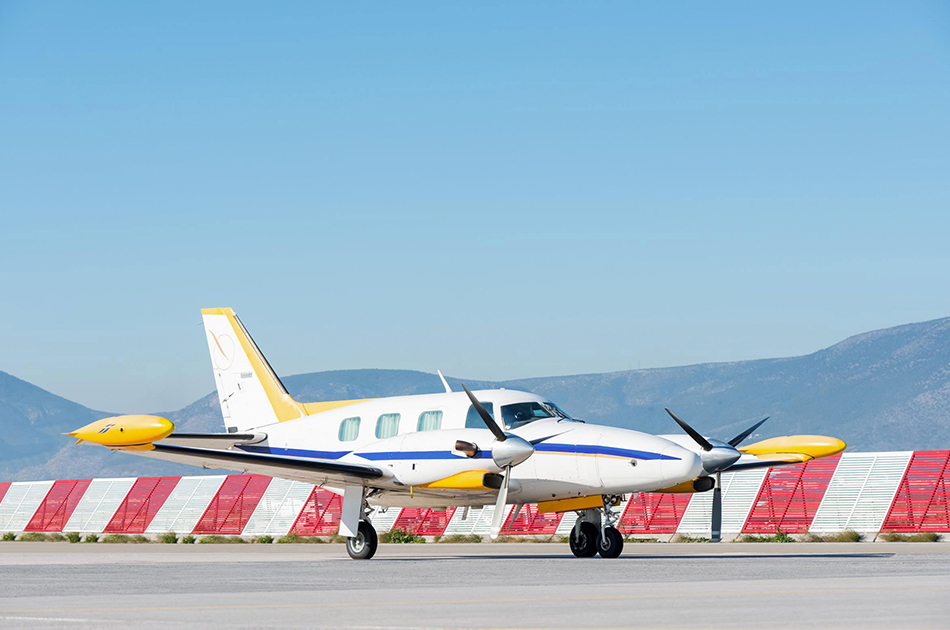
- The PA-31 Cheyenne is powered by Pratt & Whitney Canada PT6 turboprop engines (two engines in total), with the Cheyenne I using the PT6A-20 engine (550 shp each), and the Cheyenne II and III being equipped with more powerful versions such as the PT6A-27 (700 shp each) and PT6A-135 (1,000 shp each).
- Max cruising speed: Around 285 knots (528 km/h or 328 mph) for the Cheyenne III.
- Maximum range: Approximately 1,200 nautical miles (2,222 km) depending on payload and specific model.
- Max altitude: Typically 30,000 feet, though it can vary slightly by model.
- These turboprops offer strong performance, making the Cheyenne ideal for both medium and long-range flights.
Seating Capacity:
- The PA-31 Cheyenne typically accommodates 6 to 8 passengers, depending on the interior configuration.
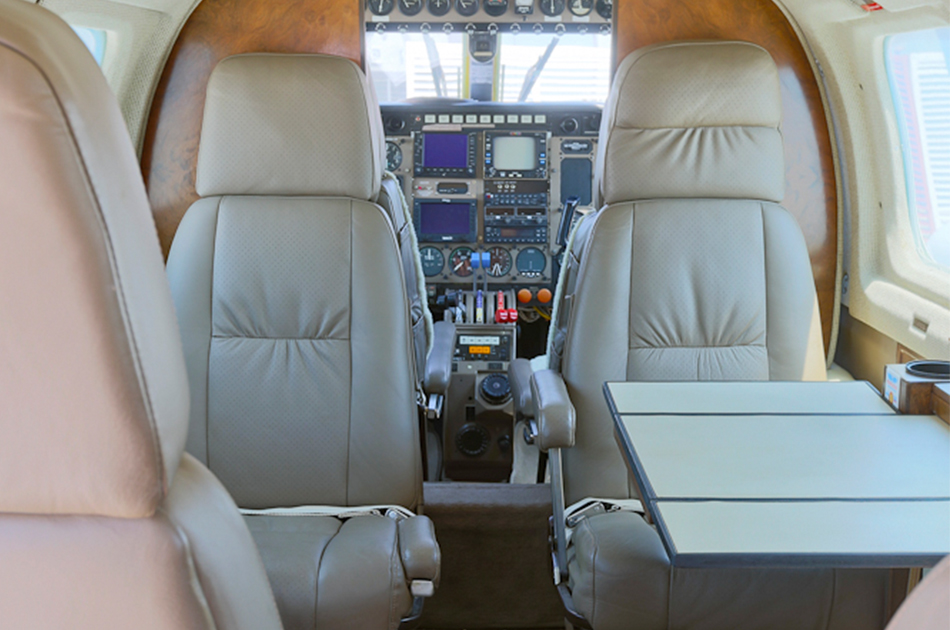
- It has a spacious cabin with seating often arranged in a club-style layout or a standard forward-facing arrangement, offering a comfortable environment for both short and long trips.
Design and Comfort:
- The cabin is pressurized for comfort at higher altitudes, providing a smooth ride even on longer flights.
- The aircraft is known for its good cabin space, making it a popular choice for small business groups or air charter operations.
- The Cheyenne has large windows that allow passengers good visibility, and its interior can be customized with amenities such as leather seating, air conditioning, and additional storage.
Handling and Stability:
- The Piper Cheyenne series is known for its excellent handling characteristics and stability, particularly during climb, cruise, and approach phases.
- The aircraft’s design gives it good short-field performance, making it suitable for operations at smaller, less-developed airfields.
- Its turboprop engines provide reliable power in various conditions, enhancing the aircraft’s versatility in both commercial and private operations.
Avionics and Equipment:
- Depending on the model and age of the aircraft, the PA-31 Cheyenne may be equipped with traditional analog instruments or glass cockpit avionics.
- Many Cheyennes are retrofitted with modern avionics packages, including GPS, autopilot systems, and weather radar, providing improved situational awareness and ease of flight.
- The Cheyenne III variant, in particular, is more likely to be found with more modern, fully integrated avionics systems.
Cargo and Versatility:
- The Cheyenne’s ability to carry both passengers and freight has made it a favorite among air cargo operators.
- With options for cargo holds and the ability to carry both passengers and cargo simultaneously, the aircraft can be used for diverse missions, including air charter, cargo transport, and even medevac operations in some configurations.
Safety and Durability:
- The Piper PA-31 Cheyenne is known for its solid construction and reliable safety record.
- With its turboprop engines, the aircraft is less dependent on higher fuel consumption compared to jet engines, offering greater economy and more reliability on short or regional routes.
- The Cheyenne series has a reputation for being easy to maintain, and parts are widely available, which contributes to its overall cost-effectiveness.
- 8 passengers